
How to Find Every Hider in Meccha Chameleon : Seeker Tips That Actually Work
How to find every hider as a Seeker. Advanced angle-holding, pattern recognition, shotgun flashlight trick, systematic clearing, and pro tactics that actually work.
- •Hunt shapes, not colors : experienced hiders match colors perfectly
- •Hold angles against walls and look along the surface : hiders pop out from the edge
- •Clear one zone completely before moving on, and always check ceilings first
The Seeker Mindset
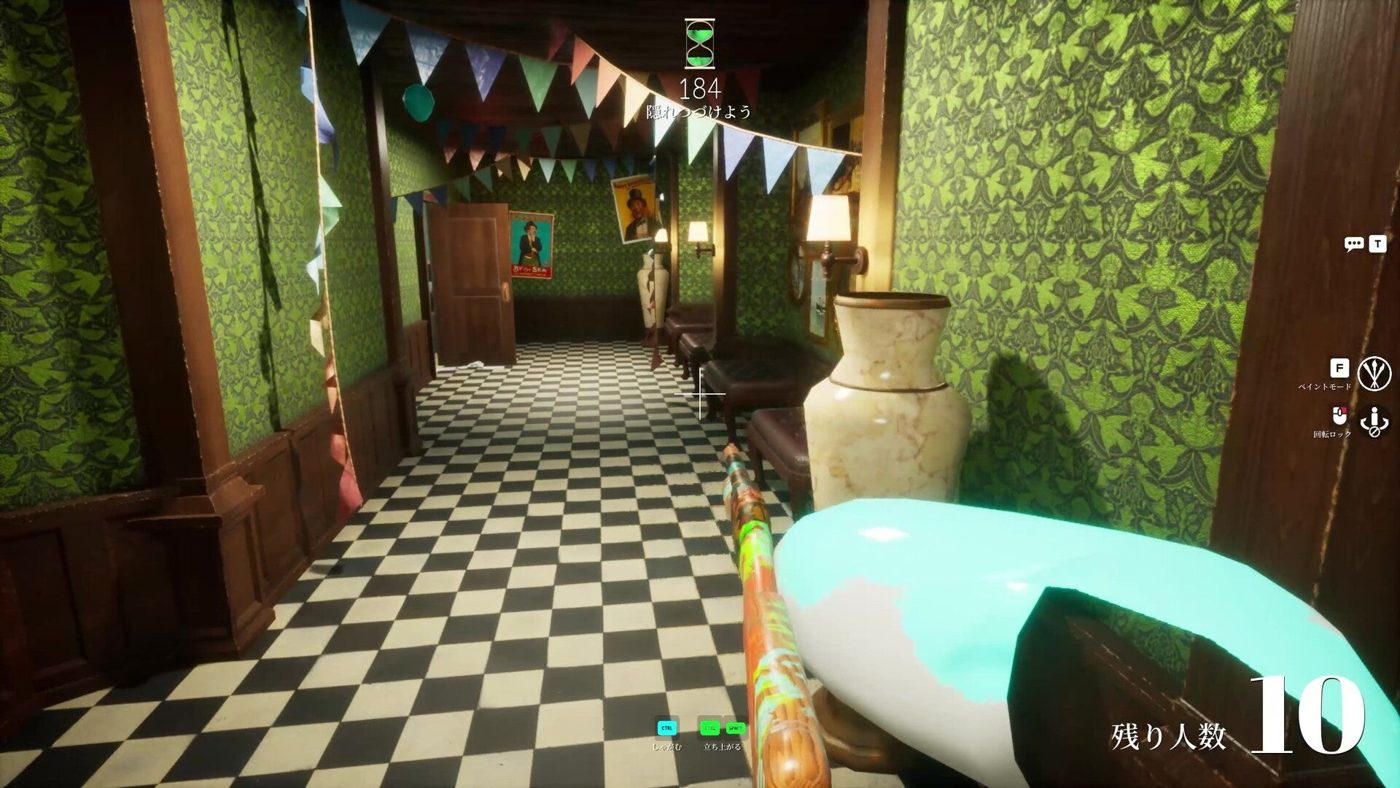
Walking around hoping to spot a wrong color doesn't work against good hiders. You need a system. The best seekers hunt patterns, not colors.
Look for Human Outlines, Not Color Mismatches
Experienced hiders nail their color matching. If you scan for "wrong colors," you'll miss 80% of good hiders. Instead, scan for shapes that shouldn't be there:
- A bump on a flat wall
- A head-shaped protrusion above a shelf
- Limbs in places limbs don't belong
- Human shoulder curves among square objects
- Feet at the bottom of what should be a flat surface
Train your eye: Before each round, spend 5 seconds looking at an empty version of the room. Memorize the "correct" shapes. Anything that deviates is a target.
Stand Against Walls and Look Along the Surface
This is the single most important Seeker technique. Here's how it works:
- Stand flush against a wall.
- Turn your camera so you're looking along the wall's surface (parallel to it), not at it head-on.
- Move slowly along the wall.
Why it works: When you look at a wall head-on, a painted hider blends in. When you look along the wall, the hider's body creates a visible bump that breaks the flat plane. This technique turns flat-wall hiders into obvious targets.
Where to use it: Every flat wall, ceiling, and floor surface. Especially effective on the Backrooms and Indoor Country maps where hiders rely on flat-surface camouflage.
Start Your Scan From High to Low
Most seekers scan at eye level (1.5-2 meters off the ground). Experienced hiders exploit this by hiding:
- On ceilings (using wall climbing)
- In high corners where walls meet
- On rafters, beams, and chandeliers
- Above door frames
- On top of tall furniture
Your search pattern should start HIGH and move DOWN. The first 10 seconds of each hunt phase, look up. You'll catch more hiders than your teammates who never look above eye level.
Use Muzzle Flash to Light Up Dark Areas
The shotgun isn't for tagging, it's also a light source:
- Fire the shotgun into dark corners or shadowy areas.
- The muzzle flash briefly illuminates everything in a wide cone.
- Use this to check dark pipes in Sewer, shadowy rafters in Mansion, or under furniture in Penguin Hotel.
Don't spam shots. Each shot has a cooldown. Only fire when you're checking a suspicious area.
Clear One Zone Completely Before Moving On
Inefficient seekers zigzag between rooms, backtrack, and waste time. Efficient seekers clear methodically:
- Start at one edge of the map (e.g., the far left room).
- Clear every surface in that zone: walls → floor → ceiling → furniture → corners.
- Move to the adjacent zone. Do not skip.
- Continue until the entire map is cleared.
Why this works: It guarantees you don't miss spots. It prevents two seekers from checking the same area twice. It minimizes wasted movement time.
Memorize the Most Common Hiding Spots Per Map
Every map has a handful of spots that beginners (and lazy veterans) repeatedly use. Check these first, you'll get a free elimination:
| Map | Noob Trap Spots | |-----|----------------| | Mansion | Behind the front door, under the pool table, dark corners of the library | | Sewer | Graffiti wall (everyone hides here), behind oil barrels | | Backrooms | Under desks, vending machine shadows | | Penguin Hotel | Among the penguin plushies (yes, really, everyone tries it) | | Indoor Country | In the hay bales, behind cow standees | | Sugar Land | Chocolate fountain, gingerbread houses | | Osaka | Truck bed, shop entrances |
Spot Patterns That Look Wrong, Even if You Can't Explain Why
Human brains are excellent at detecting broken symmetry. Use this instinct:
- A row of pillars, is one wider than the others? Shoot it.
- A bookshelf, does one section bulge out?
- A line of identical objects, is one the wrong shape?
- Ceiling tiles, is one missing the seam line?
The principle: If your brain says "something's off" even though you can't pinpoint what, trust it. Shoot. Better to waste one shot than miss a hider.
Scan Edges for Body Parts Sticking Through Walls
UE5 physics sometimes causes hiders' body parts to clip through surfaces:
- Feet poking through a wall
- A hand emerging from behind a crate
- A head above a shelf edge that should be empty
These are dead giveaways. Scan edges carefully.
Use Sound to Triangulate Hidden Players
Hiders can taunt by whistling (press 1). When you hear a whistle:
- Stop moving. The sound is directional.
- Spread out from your teammates to triangulate the source.
- The hider who whistled is in a confident hiding spot, check the most clever positions first.
But don't get baited into chasing every whistle. Some hiders whistle from safe positions to waste your time while other hiders reposition.
Shoot When You're 75% Sure, Not 50%
You have limited ammo. Every missed shot is time wasted.
- Don't shoot at suspicions. Shoot at confirmations.
- If you're 75% sure, shoot. If you're 50% sure, get closer and look again.
- A shot that misses tells the hider "you've been spotted." They may panic-move, which reveals them, but only if you're watching.
- Reload during movement between zones, not during active scanning.
Related Guides
Quick Seeker Pre-Round Checklist
- [ ] Know the map layout (where are the noob traps?)
- [ ] Set graphics to prioritize texture clarity over shadows
- [ ] Lower mouse sensitivity for smoother scanning
- [ ] Plan your clearing route (start zone, end zone)
- [ ] Communicate with teammates: who's covering which area?
Sources
This guide was compiled from multiple public sources. We cross-reference with 3+ sources before publishing.
More Meccha Chameleon Guides
Meccha Chameleon Updates 2.6 & 2.7 : Egypt Map, HIKAKIN Museum & Clone Controversy
Two major Meccha Chameleon updates dropped. Egypt and HIKAKIN Museum maps, random map toggles, Penguin Hotel randomization, and a clone game causing controversy.
Meccha Chameleon July Patch Roundup : New Mode, Osaka Rework & Hunter Ammo Limits
Every Meccha Chameleon update in July 2026. Reverse Chicken Race mode, hunter bullet limits, Osaka map rework, new rotation mechanics, and the upcoming collaboration map.
Meccha Chameleon vs Among Us vs Prop Hunt : Which Hide & Seek Game Is Best in 2026?
Complete comparison of the top 3 hide-and-seek multiplayer games in 2026. Meccha Chameleon vs Among Us vs Prop Hunt : gameplay, skill ceiling, price, player count, and which one is right for your group.